The Northridge test: heat, UV, wind, and winter rain
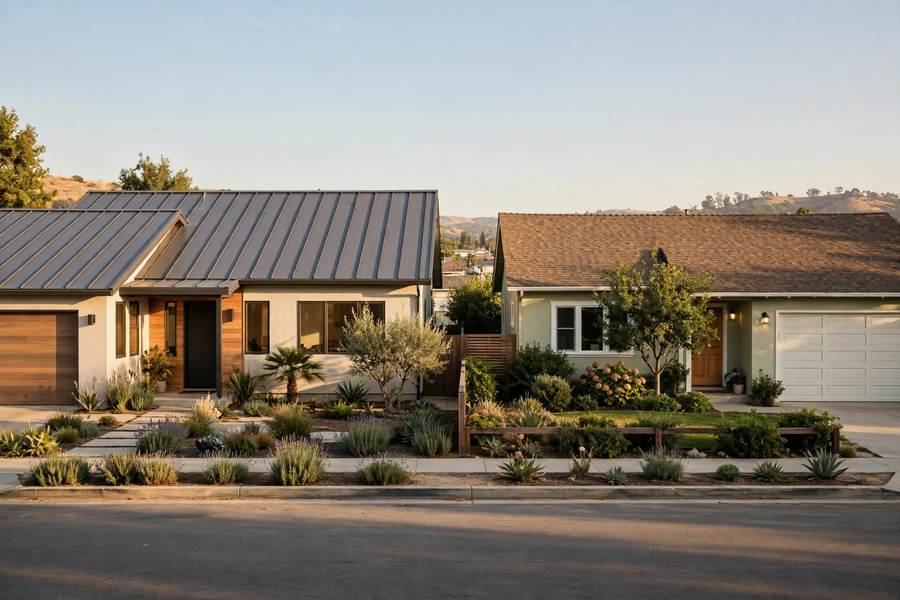
Northridge does not test roofs with snow or hail. It tests them with long, hot summers, August average highs around 90°F, a hot season roughly from late June to late September, Santa Ana wind events, and winter rain concentrated into a few months. That combination is the fair test for any material comparison, and it treats metal and shingle very differently.
Shingles age mainly by heat and UV. Asphalt loses flexibility over years of summer sun, granules shed, and edges curl and lift, which is when Santa Ana wind starts peeling them. Metal ages differently: it does not break down under UV the way asphalt does, but its performance depends on fasteners, flashing, and how thermal movement is handled. A badly detailed metal roof can leak at the same flashing points as any other roof.
How long does each typically last?
Typically, a metal roof lasts longer than a shingle roof in Northridge conditions, and typically a shingle roof needs replacement sooner. Those are tendencies, not guarantees, and no lifespan figure on this page should be read as a promise for your roof. Installation quality, attic ventilation, and maintenance move the outcome more than the material label does. A well-installed shingle roof with good ventilation typically outlasts a poorly installed metal roof, and a metal roof over a poorly vented attic still cooks its underlayment.
Ventilation is the quiet factor in both cases. In Title 24 Climate Zone 9, attic heat is a genuine roofing problem, not a comfort footnote. Good intake and exhaust ventilation, through ventilation installation and roof vent installation, protect whichever surface you choose.
Heat and cool-roof rules
Heat is where metal and cool finishes have a real edge. Reflective surfaces reduce heat gain, which matters in a Zone 9 summer. But the rules matter too: Northridge is in Title 24 Climate Zone 9, and the Ord. 183149 City Green Building Code set a steep-slope value of SRI 20 for the relevant steep-slope cases, and the current value is confirmed in the written quote. The state-level SRI 16 figure should never be quoted alone for a City job, because the Ord. 183149 City value was stricter than the state value. If you are considering cool roofing, ask which SRI value your chosen surface actually achieves and which requirement applies to your job.
Shingles can meet cool-roof requirements too, with the right product and colour, but dark shingles in full Valley sun will run hotter than a reflective metal or cool surface. That shows up in attic temperatures first, and in shingle ageing over time.
Wind, rain, noise, and repair
Santa Ana wind tests edges and fasteners on both materials. Standing-seam metal, properly fastened, typically resists wind uplift well. Shingles rely on seal strips that weaken with age, which is why older shingle roofs lose tabs in wind events that younger roofs survive. After wind, the check is the same for both: edges, flashing, and penetrations, and our storm damage roof repair page covers what that check involves.
Noise is the honest drawback of metal: rain on metal is louder than rain on shingles unless the assembly is detailed for it. Repairability cuts the other way: a damaged shingle section is a familiar, local repair, while a damaged metal panel needs matching profile and finish. And cost: metal typically costs more upfront than shingles, which is why the lifespan question matters. Paying more for a longer-lived surface only makes sense if you plan to stay, and if the installation is done well.
Do not forget tile
Any Northridge comparison that ignores tile is incomplete. Tile is common on larger local homes, and its pattern is distinct: the tile itself is durable, but the underlayment beneath it fails first, which is why lift-and-relay work, lifting sound tile, replacing underlayment, and relaying the tile, is a real Northridge service. See our tile roofing page for that story. If your house already has tile, the choice is often not metal versus shingle at all, but whether the underlayment has life left.
For homes in Northridge East and across Northridge, the right question is not which material wins in general, but which one suits your roof's pitch, your attic ventilation, your budget, and how long you plan to stay. Call Dravon Pulse Roofing at (424) 255-3700 for an inspection or a written quote. We are open 24 hours, every day.