Why a general home inspection is not enough
A general home inspection will note the roof, usually from the ground or a ladder, and move on. That is not enough in Northridge, where the expensive problems hide: underlayment failing beneath sound-looking tile, flashing patched instead of replaced, and attics so poorly vented in Zone 9 heat that the deck is ageing from below. A dedicated roof inspection checks the surface, the flashing, the attic underside, ventilation, and gutters, and photographs what it finds. Before you close on a house, that record is worth more than any seller assurance.
The outside check
- Shingles: missing, curled, or lifted tabs, especially on south and west slopes that take the most sun.
- Tile: cracked, slipped, or mismatched tiles, and any sign that tiles have been lifted and relaid before.
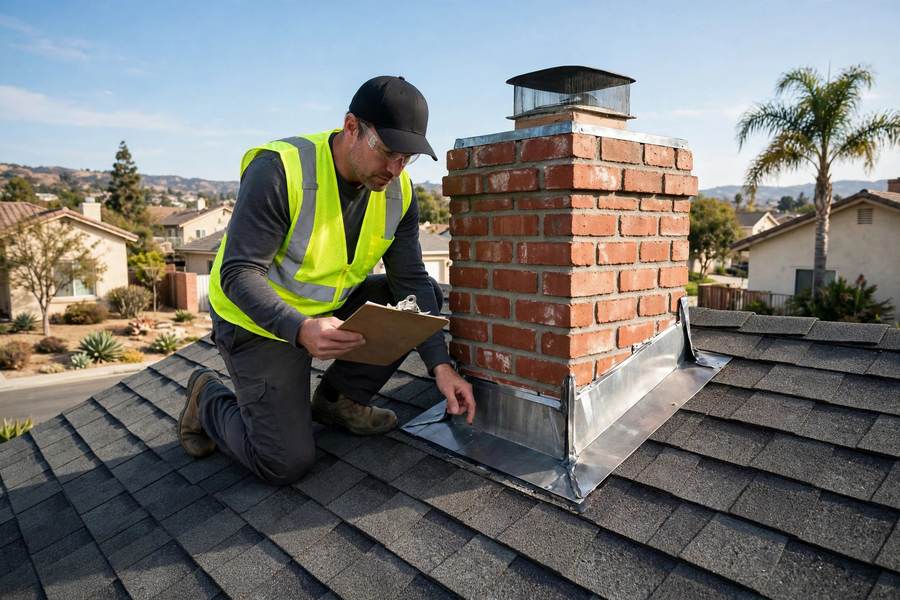
- Flashing: cracked, rusted, or heavily patched flashing at chimneys, walls, skylights, and vents.
- Valleys and drainage: debris in valleys, gutters that sag or overflow, and downspouts that discharge against the foundation.
- Flat sections: ponding, blistered membrane, and failed seams on any low-slope part of the roof.
- Penetrations: split pipe boots, loose vent flashing, and skylight flashing that has been sealed over rather than rebuilt.
The attic check
The attic underside is where a roof's history shows. Look for water staining on the deck, damp insulation, daylight at penetrations, rust on nails, and mould or mildew growth. Check ventilation too: in Climate Zone 9, an attic with poor intake and exhaust runs hot all summer, and that heat shortens the life of whatever surface is above it. If ventilation is poor, ask about ventilation installation as part of any post-purchase plan, not as an afterthought.
Also check the deck itself. Soft spots, sagging between rafters, and delaminating plywood all point to past leaks that may have been painted over inside the house. A ceiling stain that has been freshly painted is not a repair; it is a question.
Northridge-specific questions
Northridge housing has a particular pattern, and your checklist should follow it. Much of the stock is 1950s and 1960s ranch housing with a post-1994 rebuild layer, and published sources disagree on the median year built, so do not rely on a single age figure for a house. Ask instead: when was this roof last replaced, what was replaced, and is there a written job agreement or invoice to show for it?
For tile roofs, ask about the underlayment, not the tile. Tile outlasts underlayment, and a tile roof that looks fine can need lift-and-relay work soon. Our tile roofing page explains that pattern. For mixed roofs, check both the pitched and flat sections, because they fail differently and are often different ages.
For permits, ask whether any re-roofing was permitted through LADBS. Re-roofing over 100 square feet generally requires an LADBS permit before work, under the LADBS re-roof rules, and unpermitted work becomes your problem after closing. Fire-zone status, meanwhile, is parcel by parcel under the March 2025 CAL FIRE remap: do not accept a blanket statement about a property's fire zone, and check the parcel yourself.
Turning findings into negotiation
An inspection report with photos lets you negotiate on facts: a repair credit, a seller-completed repair with a written scope, or a price adjustment that reflects a replacement. What it should not do is scare you off a good house for a repairable problem. A single failed flashing is a repair. A roof at the end of its life is a budget item. The inspection tells you which one you are looking at.
If you are buying in Lassen or anywhere in Northridge, call Dravon Pulse Roofing at (424) 255-3700 for an inspection or a written quote. We are open 24 hours, every day.